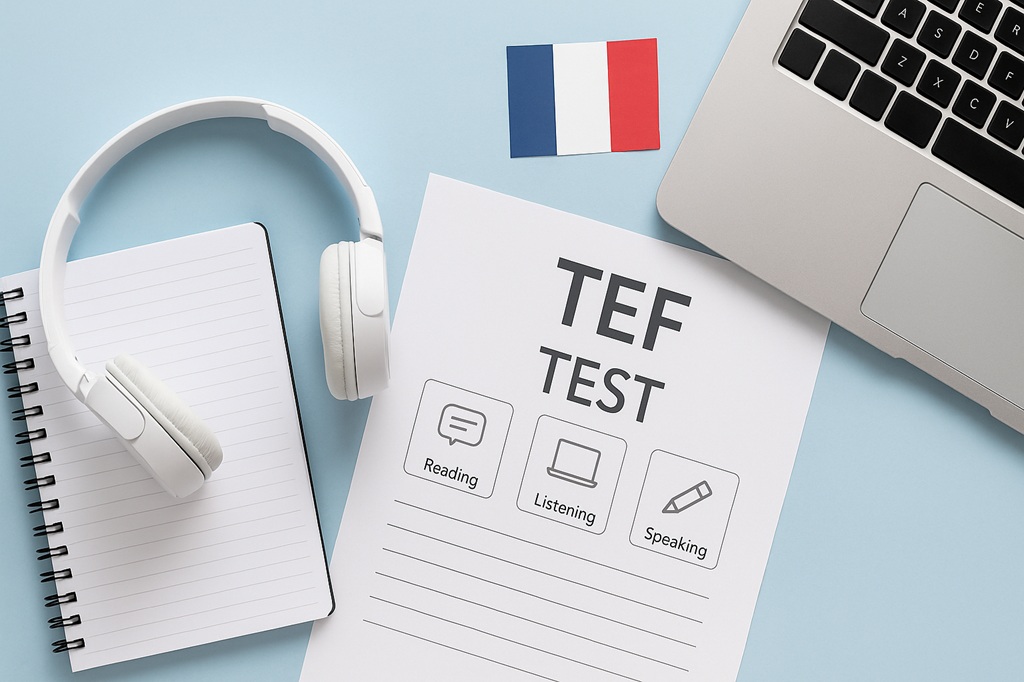
TEF Canada is one of the most important language exams for anyone planning to apply through Express Entry. It measures real communication skills, so understanding the format, scoring, timelines and the right preparation strategy makes the entire journey much easier.
Preparing for TEF Canada can feel overwhelming at first, especially if you are balancing work, family, and the pressure of getting enough points for immigration. The exam tests real communication skills, not memorised phrases. Many learners begin with basic French and still reach strong CLB levels by following a clear strategy. With the right tools, a good plan, and steady practice, the path becomes much easier to manage.
This guide answers the most common questions real TEF Canada candidates search every day, based on practical learning behaviour, real test structures, and the real difficulties students face during preparation.
1. What is the easiest way to prepare for TEF Canada if my French is basic?
The easiest way is to start with small, consistent habits and build confidence slowly. TEF Canada does not require perfect French — it requires functional skill in listening, reading, speaking, and writing. If your French is at a basic level, begin by focusing on the foundation rather than jumping straight into exam questions.
Start with simple steps like learning common verbs, basic sentence structures, and essential vocabulary for daily life. Listen to beginner French podcasts for ten to fifteen minutes a day. Add short reading pieces so your brain gets used to the language rhythm. Once you feel comfortable with simple sentences, slowly introduce TEF-style practice. A gentle start helps your mind adapt without feeling overloaded.
2. How long does it take to reach TEF Canada CLB 7 or CLB 9 from scratch?
The timeline depends on your starting level, daily practice, and how comfortable you are with learning new languages. As a rough guide:
- Beginner: 4 to 8 months of structured study to reach B2-level French
- Intermediate: 2 to 3 months of focused preparation
- Upper-intermediate: often 4 to 6 weeks if you concentrate on mock tests
Most learners aiming for CLB 7 target B2 level French; those aiming for CLB 9 need strong B2 or low C1 skills. If you practice regularly for one to two hours a day, you can make steady progress — some learners move faster if they already speak another Latin-based language. TEF is mainly a listening and speaking exam, so even students with good grammar often need extra time for their ears to adapt to natural spoken speed. The goal is not speed but clarity: French that flows enough to answer real-life questions confidently.
3. Which TEF Canada section is hardest and how can I improve quickly?
Candidates often find the listening and speaking sections the hardest. Listening challenges you because audio clips are fast and sometimes include background noise. Speaking feels difficult because you have to respond on the spot without overthinking. Reading and writing are easier to control since you can move at your own pace.
To improve quickly:
- Listen to short French recordings daily and try to summarise them
- Watch French interviews at slower speeds and increase gradually
- Practice speaking short answers aloud even when alone
- Record yourself and notice pronunciation mistakes
- Learn transition words that help you think while speaking
4. What is a good weekly study routine, and which resources actually help?
Most students try too many random resources — a YouTube video today, a PDF tomorrow, a vocabulary app the next day. It feels productive but doesn’t build real exam confidence. A simple weekly routine works better:
- 4 days of listening and reading practice
- 2 days of speaking sessions or self-recordings
- 1 day of timed mock tests
For free, module-specific practice material:
- Listening (Compréhension Orale): podcasts, news audio, and our Compréhension Orale guide
- Reading (Compréhension Écrite): French newspapers like Le Monde and 20 Minutes, plus our Compréhension Écrite guide
- Speaking (Expression Orale): record yourself daily and use our Expression Orale practice with certified tutors
- Writing (Expression Écrite): write emails and formal letters weekly, then check technique in our Expression Écrite guide
Choose tools that match your level and don’t overwhelm you. A balanced combination of free daily practice and structured mock tests works better than relying on one big resource alone.
5. How much does the TEF Canada exam cost and how do I register in my city?
The exam fee varies depending on the test centre and city, typically in the CA$400–460 range. Registration usually requires selecting a centre, choosing a date, and paying online — seats fill fast, so early booking is better. You will need a valid government ID and sometimes a recent photo; after registering, the centre sends instructions for reporting time and required documents. See our full TEF Canada registration guide for the step-by-step process.
6. What TEF Canada score do I need for Express Entry immigration points?
Your TEF scores convert into CLB levels, and CLB levels determine how many immigration points you get. The points increase significantly once you hit CLB 7 or CLB 9 — CLB 7 gives a moderate points boost, while CLB 9 gives a strong boost, especially combined with education and work experience. Check the latest scoring tables for exact conversions; the key point is that higher TEF scores can make a major difference in your overall Express Entry ranking.
7. How can I improve TEF Canada speaking scores if I have no one to practice with?
You can improve speaking even without a partner. The trick is to create a daily practice rhythm that forces your tongue and brain to work together — speaking fluently requires muscle memory as much as vocabulary.
- Record short responses to common TEF questions
- Listen back and fix pauses or unclear words
- Use picture prompts and describe them for one minute
- Watch a French clip and talk about it in your own words
- Repeat phrases aloud to build pronunciation confidence
Speaking alone may feel odd at first, but it works — you learn to think faster and express ideas without translating from your native language.
8. Are TEF Canada sample tests and mock exams enough to reach CLB 7 or CLB 9?
Mock exams help a lot, but they work best combined with steady language practice. A mock test shows you your gaps — whether you struggle with speed, vocabulary, grammar, or listening distractions — but mock tests alone do not build the language skill you need. Use sample tests to measure progress, not as your only study tool. After each mock exam, review mistakes closely, identify patterns like missed articles or slow reading speed, and fix them in daily practice.
9. What is the best strategy to finish TEF Canada listening and reading sections on time?
Finishing on time is a common problem. Listening is fast, and reading has many questions to cover — you need a rhythm that saves seconds without sacrificing accuracy.
- Skim the reading passage before reading the questions
- Underline or mentally note key words
- For listening, predict the type of information you expect before the audio plays
- Do not get stuck on one question — keep moving and come back if time allows
- Practice listening to voices at natural speed rather than slow French
10. Where can I find TEF Canada mock tests with scoring similar to the real exam?
Accurate scoring helps you understand whether you are close to CLB 7 or CLB 9, and shows how examiners grade writing, speaking, and comprehension. MockNest provides TEF-style practice and mock tests that mirror the real exam flow, with timed sections and realistic grading so you know exactly what to fix. Learners often take 15 to 20 listening mocks before the final exam — that repetition is where most of the confidence comes from.
Final Thoughts
Preparing for TEF Canada does not have to feel overwhelming. Once you understand the exam, the scoring, and the skills required, the process becomes manageable. Focus on building your French slowly and consistently, use mock tests to guide your progress rather than just check scores, and develop a speaking routine you repeat every week.
If you stay steady and keep improving bit by bit, reaching CLB 7 or even CLB 9 becomes a very real possibility — and once you get there, the impact on your immigration journey is significant. Ready to see where you stand? Try a free TEF Canada mock test today.